Ten Years of the Innovation Lab: From Experiment to Compass for the Future
It was an unusual sight: in September 2016, the Management Board stood with numerous colleagues in a room where much of what typically characterised everyday banking life at the time was missing. Instead, there was a start-up atmosphere with tables encouraging collaboration, tech gadgets such as VR headsets, and space for ideas that had not yet found a place elsewhere in the bank. The Innovation Lab was opened. “At the start, we didn’t really know exactly what to expect ourselves,“ recalls Dirk Elsner, the long-standing Group Head of the Innovation Lab. “And neither did the specialist divisions.“ Looking back, he says, it was precisely this openness that proved to be the greatest advantage.
How it all began
Its roots go back a year further. In 2015, DZ BANK established its Innovation Management department – with the remit of strengthening the capacity for innovation within the AG and the Group. “It was clear from the outset that this would require concrete initiatives, not just declarations of intent,” says Franz Welter, Head of the Innovation, Digitalisation and Verbund department. “The Innovation Lab was the perfect solution.”
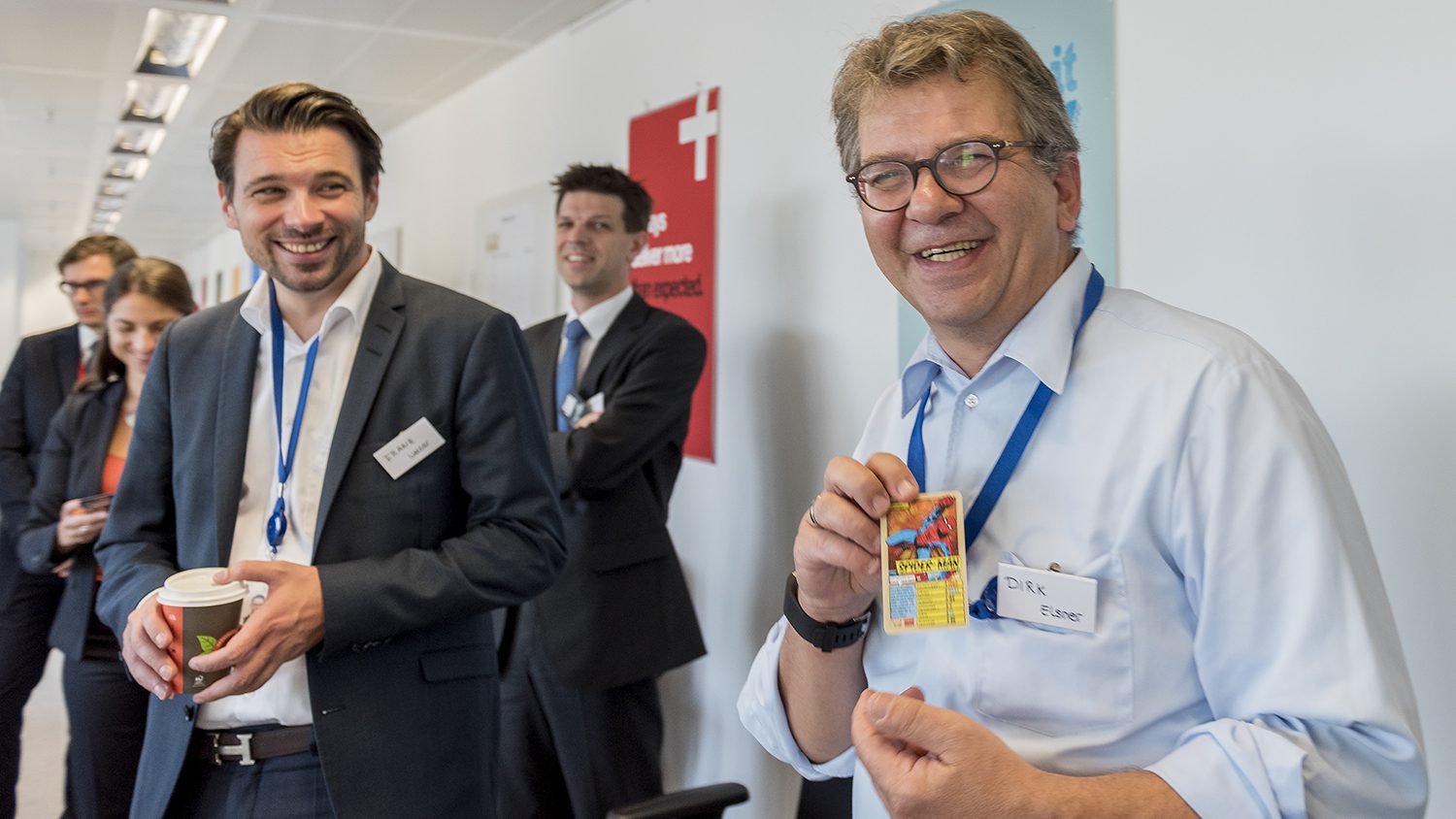
The founding team was small: four people aged between 30 and their early 50s set up the Innovation Management department. Today, 15 people work in the department, six of whom are dedicated exclusively to the Innovation Lab. The biggest hurdle in the first few months was not a technical one, but one of trust. That's because, to this day the Lab still operates on a simple principle: “We advise and inspire, but we don’t come up with the topics ourselves,” emphasises Elsner. “They come from the specialist divisions.” And so the first task was to convince colleagues to take part in the Lab with their own topics and ideas – in a space where no one yet knew what to expect.
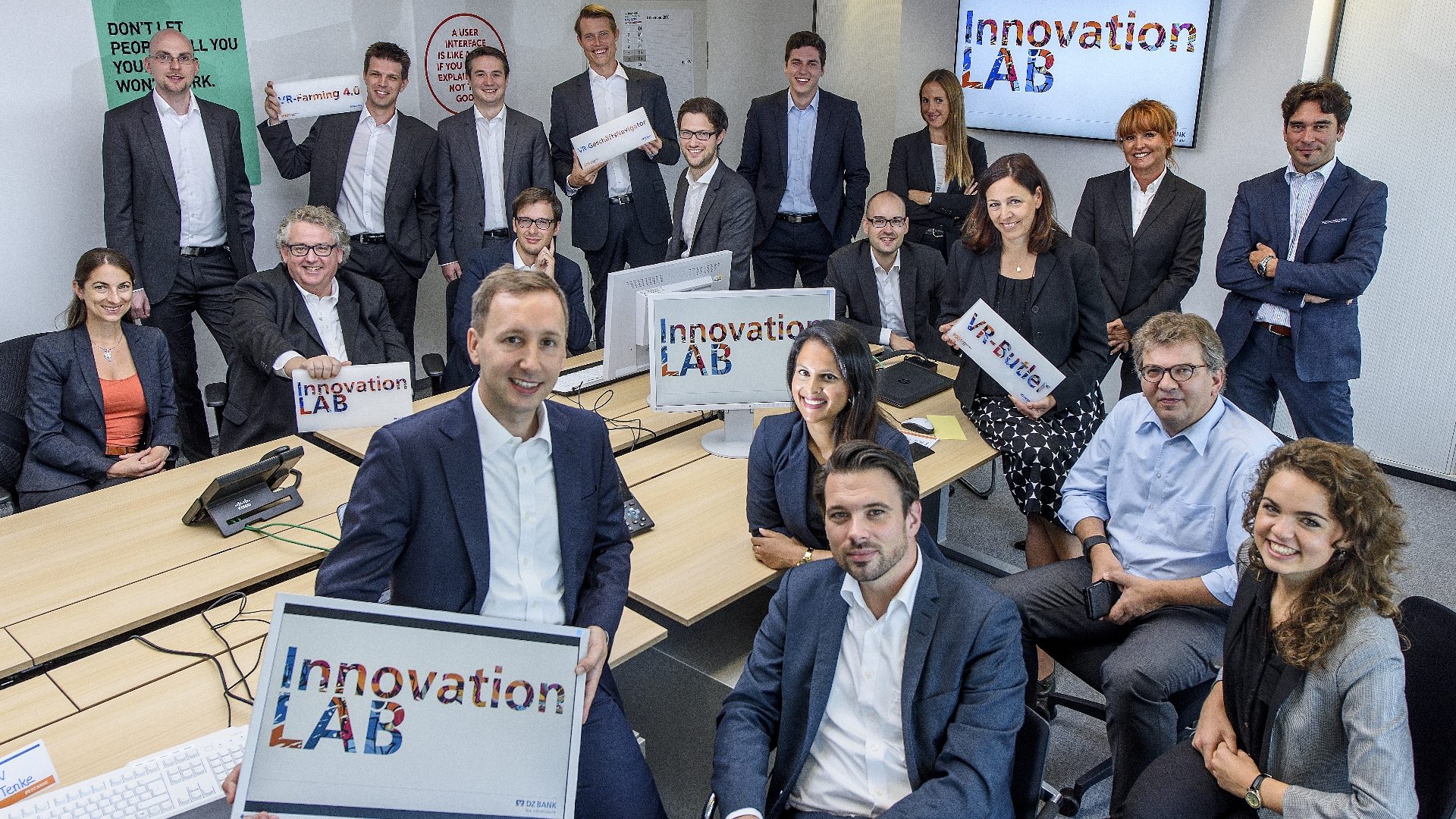
The launch was a success. The first projects demonstrate just how broad the scope was right from the start: the VR Business Navigator, a digital tool for the Volksbanken, is still in use today. The VR Butler lives on as a spin-off from VR Smart Finanz. And VR Farming 4.0, an information platform for the agricultural sector, was early evidence that the lab was able to explore unconventional avenues – even if not every project proved successful.
A hackathon, that made history
The Innovation and Digitalisation department made a big impression right from year one. A hackathon brought together over 100 participants from DZ BANK, the Group, the Volksbanken, ADG and Atruvia’s preceding organisation. “It was a fantastic shared experience,” says Elsner. “It showed just how creative the Cooperative Financial Group is when it comes together to brainstorm ideas.” In the years that followed, there were nine further hackathons – on topics such as artificial intelligence and chatbots.
Growth, relocations and a turning point
There has also been a lot of movement in terms of premises: from Cityhaus I to the TechQuartier – where, at times, start-ups and Deutsche Bank were neighbours, fostering exchange – and on to W1 Workspace. However, the hope that collaborations would arise simply through physical proximity to start-ups was not always fulfilled. “You have to remain realistic,” says Welter. “Not every start-up with a cool idea is a good fit for a bank. And not every idea revolutionises the financial sector.” Today, the initiative for collaborations usually comes from the specialist divisions, which is a sign of how deeply the culture of innovation is now embedded within the bank.
The decisive leap came in 2019. The Lab expanded its offering to include several new formats at once: the Sprint LAB for rapid development cycles, the Trend LAB for looking ahead, as well as the Data LAB and the Process LAB. “Not every department needs a finished prototype,” explains Elsner. “With these new formats, we were able to cater to a wide range of needs.” The Trend LAB launched with two topics that few people were aware of at the time: stablecoins and quantum computing.
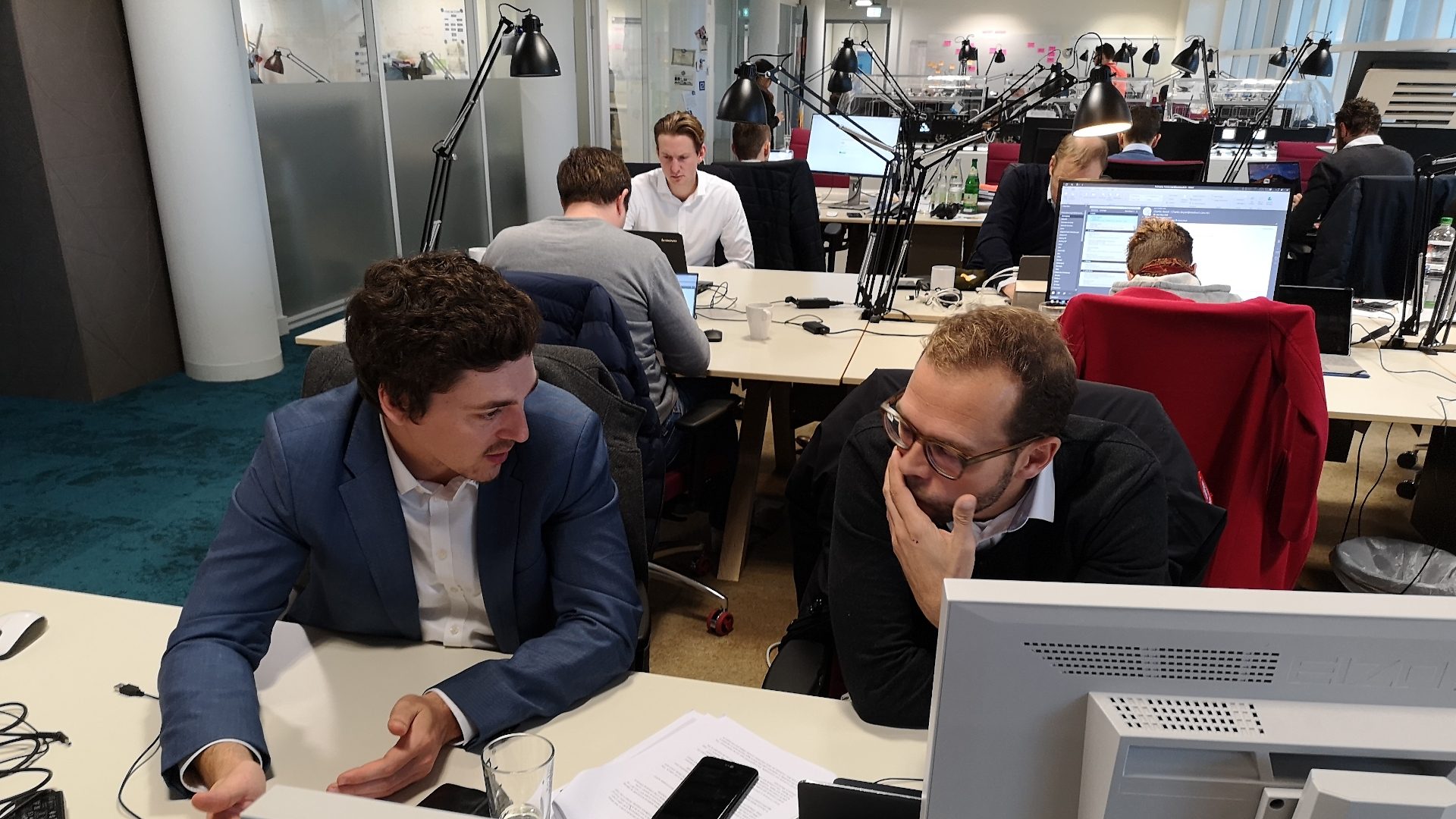
At the same time, the agile way of working that had characterised the Lab from the outset began to have an ever-greater impact across the entire bank. “Many who had worked in the Lab wanted to carry on in the same way in their own projects afterwards,” says Welter. In the years that followed, agile methods became increasingly prevalent in mainstream projects, and with them came a genuine culture of experimentation. One example that is particularly close to Welter’s heart is the Smart Derivative Contract from 2018. The Capital Markets division introduced the topic to the Lab. The product was then further developed and tested with various trading partners in real transactions – recently even internationally. This also created the foundation for later innovations such as Smart Bonds and potential use cases for stablecoins. “To me, this is a prime example of how an idea from the Lab can have a lasting impact.”
Then came the real test in 2020: overnight, the COVID-19 pandemic forced the Lab to switch to remote work. It was a turning point that also demonstrated just how adaptable the team had become.
199 topics – two thirds were implemented
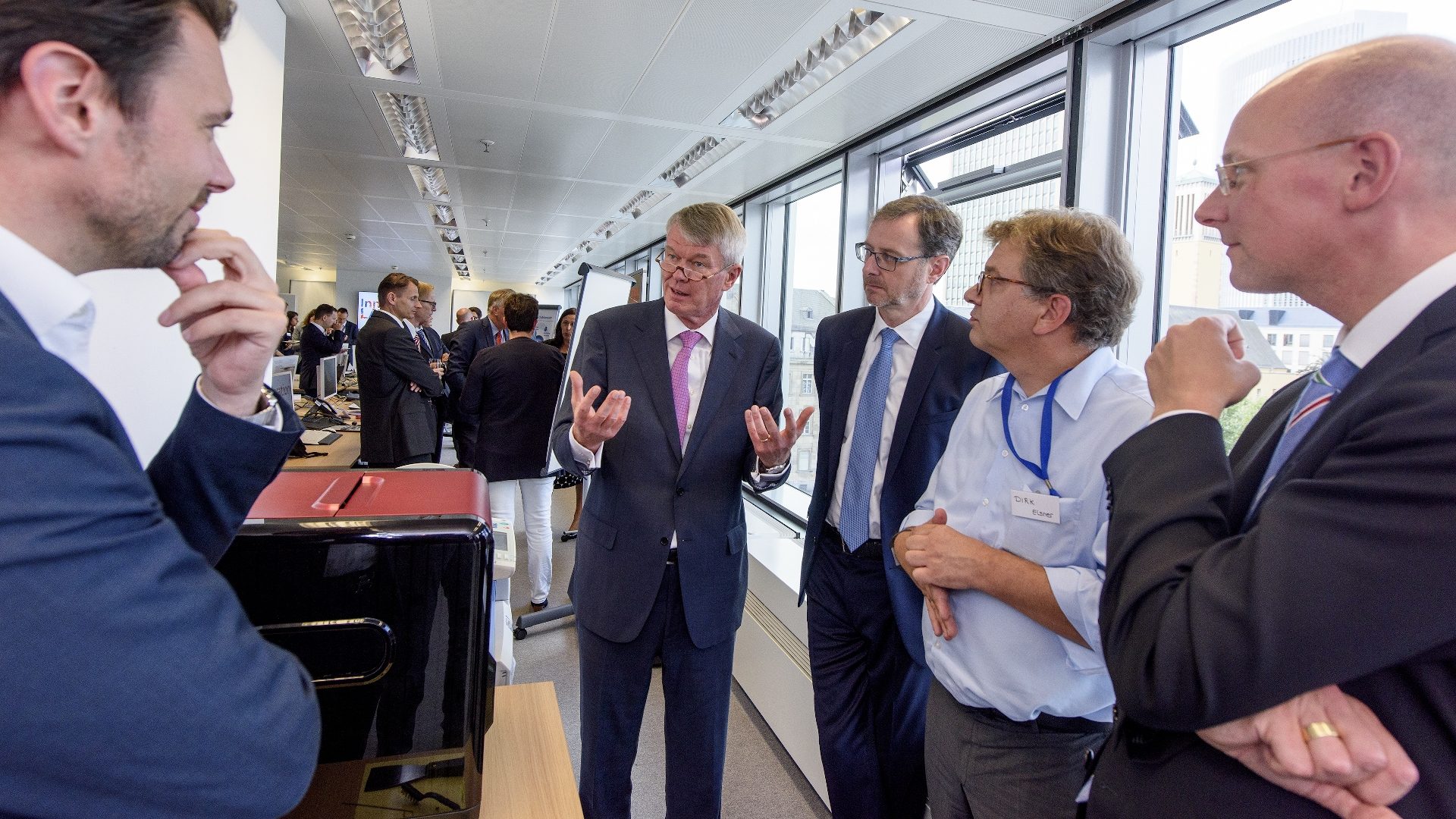
The ten-year track record is impressive: since its founding, the Innovation Lab has worked on 199 topics—together with cooperative banks, Group companies and external partners, including the retail group REWE. Around three quarters of the prototyping projects were subsequently implemented. Among the most visible results are VR FinanzManagement and the Smart Derivative Contract. In addition, the Lab has provided important impetus for the introduction of Artificial Intelligence in the bank. The teams have repeatedly been given the opportunity to present their findings to the Management Board, which has been a highlight for those involved and a testament to the strategic relevance of their work.
“At the beginning, the Lab was an experiment for us,” says Elsner. “Since then, interest has continued to grow steadily. This is particularly evident in the significance of the topics that specialist divisions now bring to us.”
AI, DLT and the invisible bank
Artificial Intelligence is currently right at the top of the agenda. This comes as no surprise. As early as 2020, a Trend LAB addressed the topic for the first time. In 2024, the Lab devoted an entire year to AI. Today, the Fit4G AI LAB provides a dedicated format that works with specialist divisions and IT to optimise specific process flows using AI.
However, AI is not everything. Franz Welter identifies two further areas of great significance for the coming months: DLT technology in all its forms, such as stablecoins, crypto-assets and tokenisation. And then there is Embedded Finance – banking services that are integrated into other products and services. “This is how we will win the customer interface of tomorrow. The Innovation Lab provides a crucial impetus for this,” emphasises Franz Welter.