The Computing Giant from Chemnitz
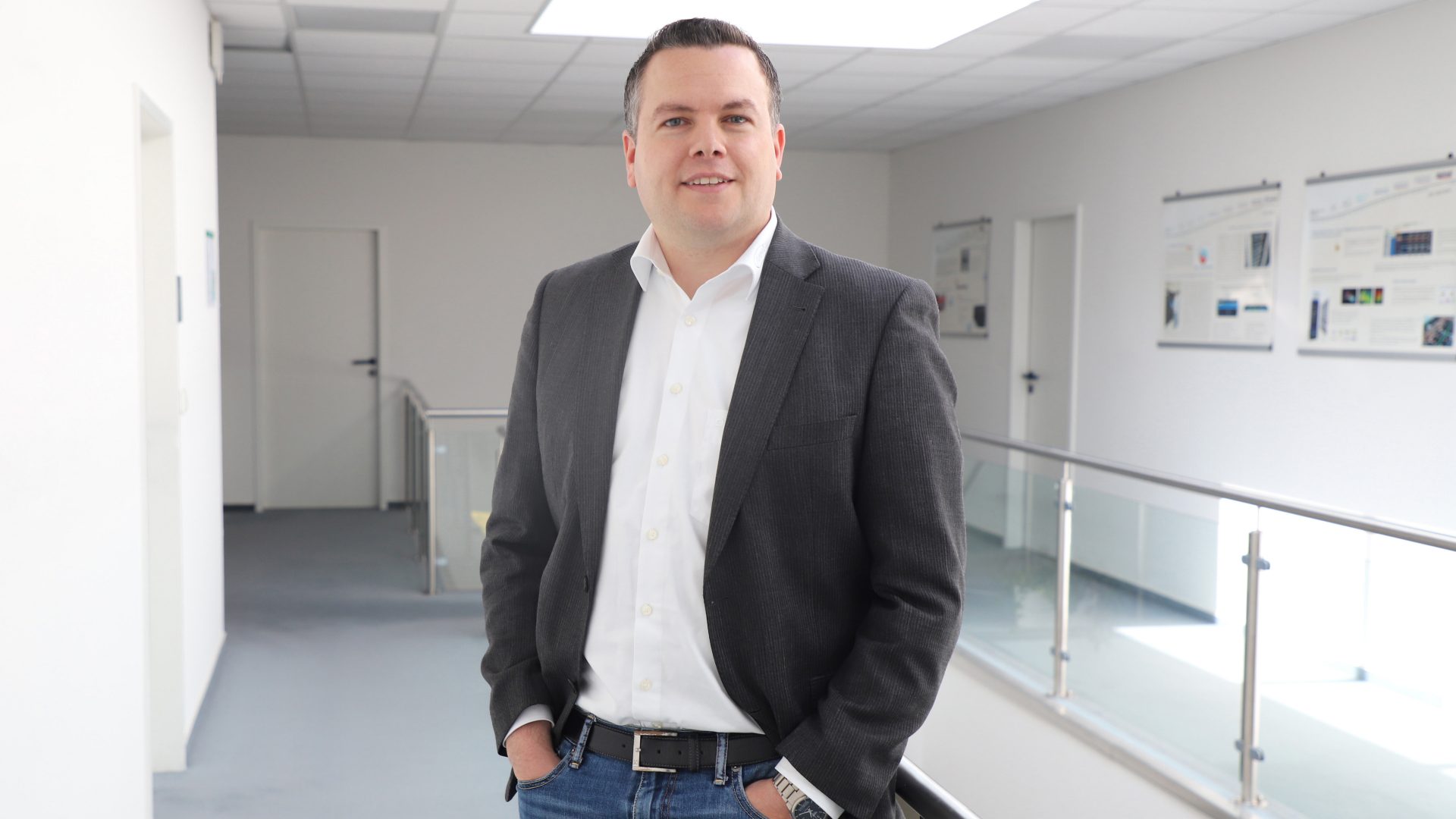
Anyone boarding a new airplane today can be sure that it has already completed tens of thousands of takeoffs and landings. Long before the first passenger steps on board, a simulation has already tested what the materials must endure: from the freezing cold of the atmosphere to 40 degrees during a landing in Dubai—including turbulence in between. “I find it very reassuring to know how many flight hours a component can withstand,” says Axel Auweter, co-CEO of MEGWARE. The company builds the supercomputers needed for such tests.
Behind every ChatGPT response is a supercomputer
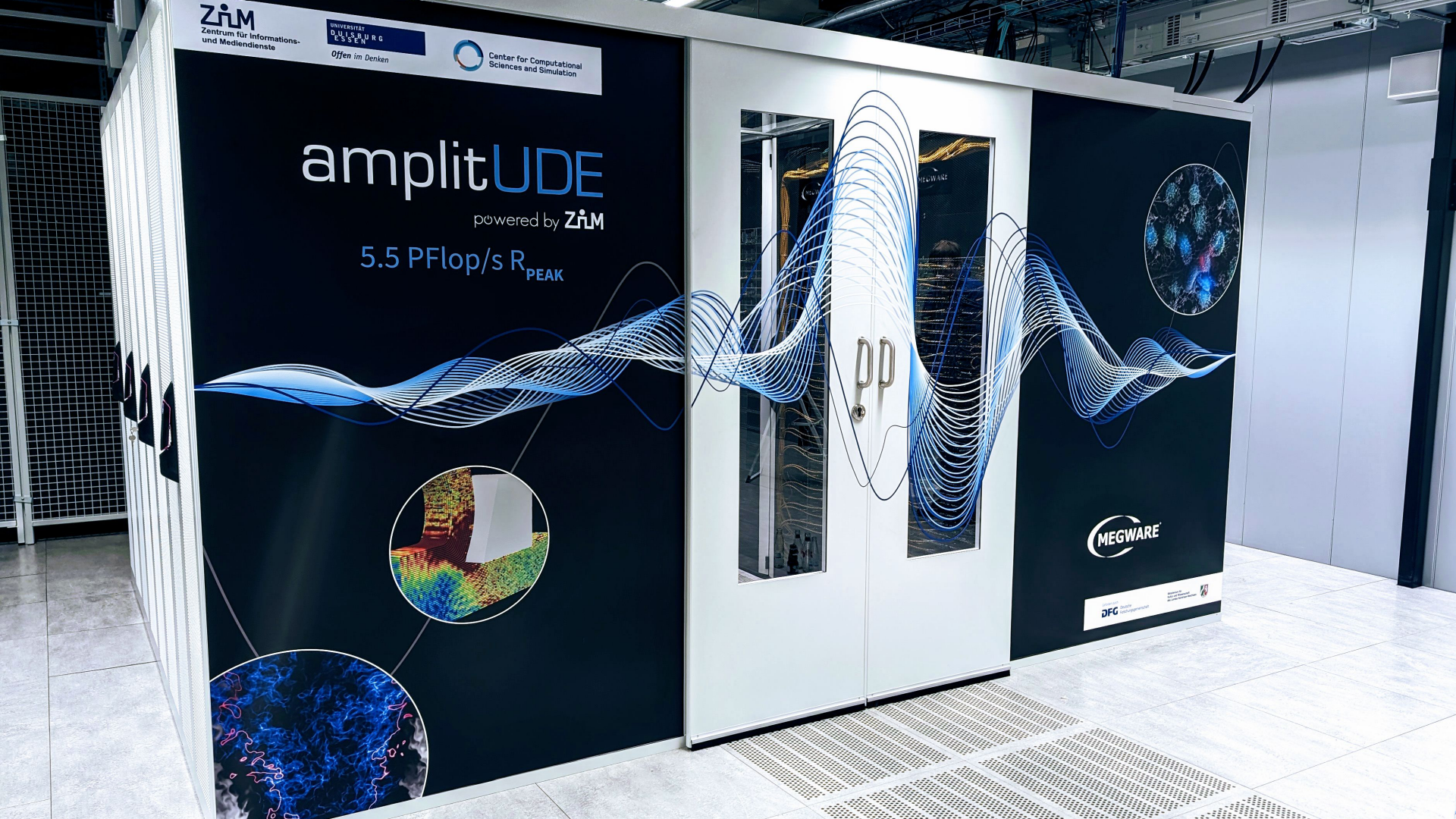
People usually assume that manufacturers of such high-tech machines are based in California. In fact, one of them is located in Chemnitz. MEGWARE delivers its supercomputers whenever complex calculations and simulations are required or massive amounts of data need to be processed. They are in high demand primarily in industrial research and science, at large companies as well as at universities.
One topic is currently driving demand in particular: artificial intelligence. “If you come from the field of high-performance computing, you might say—somewhat dismissively—that AI is really just another application of supercomputers,” says Auweter. What is currently emerging in AI infrastructure largely overlaps with what MEGWARE has been building for the past 15 years. When OpenAI trains a new language model, the process takes weeks and involves many iterations—just like a large-scale scientific simulation. “During training, AI and supercomputing are exactly the same thing.”
Indispensable for Germany as a Business Hub
MEGWARE is far more than just a regional flagship for Chemnitz. The company is significant for Germany as a whole as a business hub. Supercomputers form the foundation not only for AI but also for quantum technology, fusion energy, microelectronics, and biotechnology. The German federal government has defined all these fields as priorities in its research and innovation strategy, “High-Tech Agenda Germany.”
A company like MEGWARE is therefore enormously important for Europe’s technological sovereignty. Just how exceptional its position is can be seen in the Top 500 list, the global ranking of the fastest publicly known supercomputers. MEGWARE is the only small-to-medium-sized enterprise (SME) to rank among the top 10 manufacturers on that list, both in terms of the number of listed systems and their computing power. It thus holds its own alongside corporate giants such as HPE, Lenovo, and Dell. Auweter cautions, however, against confusing technological sovereignty with self-sufficiency. “Our supply chains are so globally diversified that it’s simply not possible to bring everything back to Europe.” Sovereignty, he explains, means having such a strong negotiating position that one can stand up and walk away at any time if a partner tries to exploit a dependency.
The fact that Germany wants to strengthen its position in this area benefits MEGWARE. “We’re blessed in our industry,” says Auweter. A tailwind is coming from the German research landscape. Hardly any other country in Europe can afford three data centers in the highest performance class—in Jülich, Stuttgart, and Garching near Munich—plus a network of about eleven other high-performance sites. As a result, an entire generation of excellent specialists is emerging in this country. Megware benefits directly from this.
“As a bank, you don’t often have a client like this.”
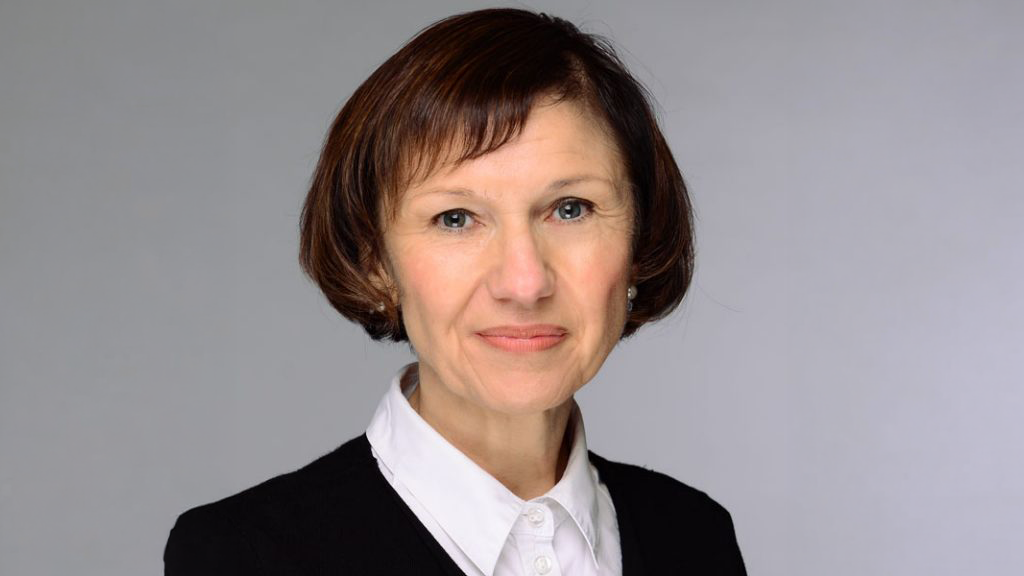
MEGWARE’s exceptional profile also makes it an attractive prospect for DZ BANK, which serves the company in collaboration with Volksbank Chemnitz. “The market for supercomputers is a niche one. As a bank, you don’t often have a client like this,” says Katrin Jahn, the corporate client advisor in charge. “But despite the innovative product, financing it is challenging.” While clients such as the public sector make large down payments, However, supply chains are difficult to predict due to current global developments, and prices for electronic components fluctuate. Compounding the issue is the fact that growing demand for AI infrastructure is driving up prices for the necessary components even further. DZ BANK supports MEGWARE with a guarantee line. Through this line of credit, the bank guarantees to MEGWARE’s customers that a project will be implemented in accordance with the contract.
The scale of the business is enormous for a medium-sized company. “With our 50 employees, we move a great deal of money each year,” says Auweter. Because MEGWARE isn’t backed by a large corporation that can pre-finance capital-intensive projects on its own, support from financing partners plays a central role. “There are people who say that large IT corporations are more like banks than service providers these days,” says Auweter. “We’re not a bank; we need banks that understand our business model. That’s why we’re pleased to be working with DZ BANK.”
However, it’s not just MEGWARE’s exceptional market position that Jahn appreciates. What also makes the company interesting to her is how consistently it has reinvented itself over the years. Founded after German reunification, it initially sold assembled PCs in retail stores. Demand was high, and at one point there were 34 stores. When the major electronics chains entered the market, MEGWARE pivoted and began building supercomputers. “I’m impressed that a medium-sized company can transform its business model in this way and rise to the top of the global market,” says Jahn.
Progress never sleeps
Meanwhile, the industry is changing once again. Intensive research is being conducted on new technologies such as quantum computers, optical computers, and neuromorphic chips. Auweter does not see this as a threat to supercomputers. “No technology has ever completely replaced another,” he says. “Rather, the systems are becoming more heterogeneous.” Megware’s strength, he says, lies precisely in bringing all these building blocks together and assigning the appropriate part of the system to each computing problem.
In the end, says Auweter, the computer is just a tool anyway. Progress is driven by the people who work with it—the pharmaceutical researcher who discovers a new active ingredient, the engineer who builds a more efficient airplane. And perhaps, he hopes, some of the applications made possible by supercomputers will also bring society closer together again. “The biggest problems can only be solved globally by working together anyway.”
Author: Mirja Lehleuter, press officer at DZ BANK