Mittelstand “on hold”: Investment slumps amid growing concerns about order intakes
- Business climate improves slightly, but expectations decline sharply
- Investment confidence at its lowest level since 2009
- Bureaucracy still the biggest problem for 80 per cent of companies
- Balance sheet quality stable, equity ratio reaches record high
Berlin/Frankfurt, 1 December 2025 – The current economic climate remains very challenging for the German Mittelstand. Based on ongoing negative factors, such as raised US import tariffs and generally sluggish orders, investment confidence at Mittelstand companies has fallen to its lowest level since the financial market crisis. Only about 63 per cent of respondents plan to invest in their companies in the next six months. Although companies assess their business situation as three percentage points better than in the spring, expectations are now much less optimistic. Bureaucracy is said to be the most significant negative factor. Concerns about a lack of orders have also reached an all-time high. These are the conclusions reached in the current “Focus on the Mittelstand” report produced jointly by DZ BANK and the National Association of German Cooperative Banks (BVR), which records current conditions in the Mittelstand sector every six months. The 60th edition of this representative analysis is based on a survey of more than 1,000 Mittelstand companies.
“The Mittelstand is sending a clear warning signal: Many companies are currently experiencing a lack of genuine planning certainty, with bureaucracy continuing to impose the heaviest burden. Although the package of fiscal measures from the German government may provide relief, decisive structural reforms will be needed to instil greater confidence in the business sector and stimulate investment on an ongoing basis” comments BVR President Marija Kolak on the results. “The Mittelstand now needs speed and clarity achieved through bold and sweeping reforms. For example, statutory social security relating to pensions, nursing care, and health insurance is in need of reform. Kolak says that greater planning certainty on labour costs can only be achieved for businesses if the upward trend in contribution rates is halted and the overall burden permanently reduced to below 40 per cent”.
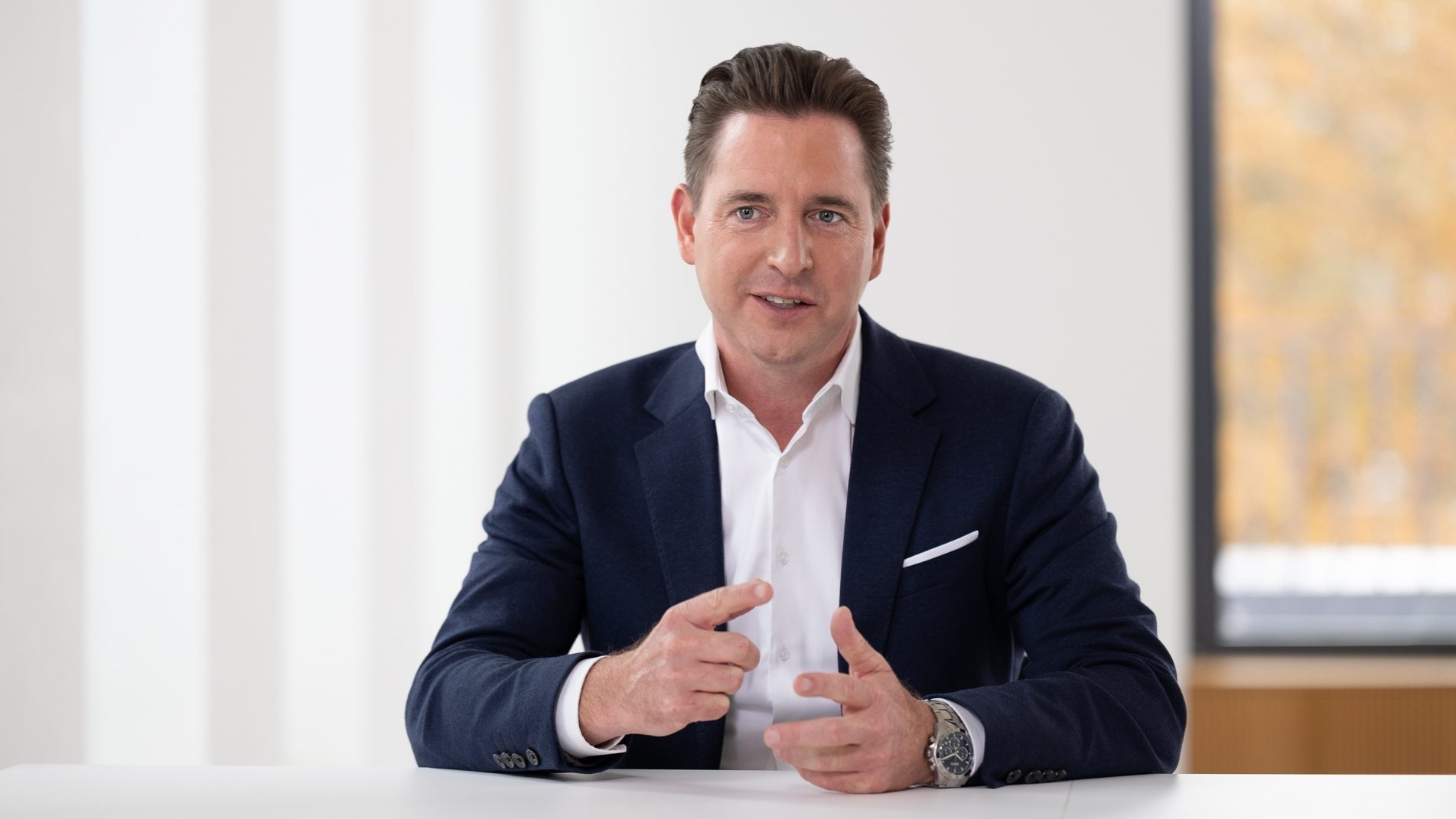
“The increase in the number of companies expressing concern about their order situation is unsurprising given the continuing weak economy. However, the results are alarming, particularly since companies are feeling the pressure of both the weak German economy and growing competition from China in the areas of technology and engineering products. Companies must try to retain a technological edge. To be competitive, innovation must be driven forward more rapidly and development phases accelerated. To this end we need better locational conditions” says Stefan Beismann, Head of Corporate Banking at DZ BANK.
Subdued sentiment
The survey results show an uneven trend in economic sentiment in the Mittelstand this autumn. Mittelstand companies are slightly more positive about their current business conditions again for the first time after four successive declines. Sixty one per cent of the companies surveyed consider their conditions to be “good” or “very good” – an uptick of two percentage points on the spring. At the same time, a slightly smaller number of companies regard their business conditions as “fairly poor” or even “poor” (autumn 2025: 39 per cent; spring 2025: 40 per cent). The most negative assessments of business conditions were recorded in the metal, automobile and mechanical engineering industries and in the retail sector. Business conditions are currently rated as significantly better for Mittelstand services companies with a strong domestic orientation, and in the construction sector.
In contrast to their assessments of current conditions, Mittelstand companies were considerably more negative about their business expectations over the next six months compared to the spring. The balance of optimistic (autumn: 26 per cent; spring: 30 per cent) and pessimistic (autumn: 20 per cent; spring: 16 per cent) expectations is down from 14 points in the spring to only six points. However, a small majority of the Mittelstand companies surveyed still expect their future business conditions to improve. Expectations fell in all sectors in the autumn, albeit only very slightly in many cases. The majority of Mittelstand companies in the agriculture, food and construction sectors take a pessimistic view of their business trend in the next six months.
Low investment confidence
The continuing economic slowdown is keeping economic investment activity well below pre-pandemic levels and Mittelstand companies are no exception. Only about 63 per cent of respondents plan to invest in their companies in the next six months. This is the worst result since autumn 2009, i.e. since the era of the financial market crisis. Despite the weak trend, investment confidence continues to increase in line with the size of the company. Accordingly, 82 per cent of Mittelstand companies with sales of more than EUR 50 million still plan to invest in the next six months.
Bureaucracy remains the greatest problem
The burden of bureaucracy remains right at the top of the list of concerns for Mittelstand companies this autumn. However, similar to wage and salary costs and the skills shortage, the proportion of companies which regard these issues as their current problem areas has declined slightly compared to the spring survey.
The proportion of respondents who are concerned about the bureaucratic burden has thus fallen by four points to 80 per cent. On a long-term comparison, this remains very high, particularly since US trade policy has had an additional negative impact on some sectors. While large companies tend to have access to the experts and capacity needed to process what are often much more complex US customs declarations, Mittelstand companies - for example in the mechanical engineering sector - carry a disproportionate burden here.
However, concerns about order levels have grown. One in two Mittelstand companies now complains of a lack of orders. This has also led to heightened concerns about the competitive situation this autumn.
Robust balance sheet quality
Balance sheet quality seems to be stabilising at a robust level in the Mittelstand. Although companies were confronted with a phase of marked economic weakness in the years 2023 and 2024, which has persisted in 2025, the current reading of 125.2 points for the balance sheet quality index has remained virtually unchanged from the previous year.
However, the consequences of the ongoing economic slowdown have definitely impacted the annual results which have been reviewed. Four of the five sub-indices which are taken into account in the balance sheet quality index have fallen. However, these declines have been virtually offset by a further marked improvement in the equity ratio. The average equity ratio of Mittelstand corporate customers included in the survey has risen from 28.4 per cent in 2022 to 29.8 per cent in 2023, and reached a new record level of 31.0 per cent in 2024. Heightened economic uncertainty has obviously prompted companies to further increase their financial resilience. The ongoing general reluctance to invest has probably also helped to raise the equity ratio.
The ”Focus on the Mittelstand” report
The data in the VR Mittelstand survey was compiled in the period from 9 September to 14 October 2025 and was based on telephone and online interviews. The sample of more than 1,000 companies is representative; interviews were conducted with owners and directors of Mittelstand companies in Germany or with people authorised by them. The VR balance sheet analysis is based on almost 2.6 million annual financial statements (balance sheets and income statements) which Mittelstand corporate customers of the cooperative banks submitted as part of their loan applications in the years 2001 to 2024. Around 5,200 financial statements are available for 2024 (projection).